

Treat Team: Tackling mental health through video gaming
Context
Treat Team aimed to explore how gamification and behavioral design could support habit formation and self-discipline among college students and early-career young adults. The project examined whether connecting real-world task completion to in-game progress could increase engagement and follow-through, while integrating mindfulness and self-care as part of everyday routines.
Our Goal
The goal was to design and evaluate a gamified system that could support habit formation and self-discipline by linking real-world task completion to in-game progress, while incorporating mindfulness and self-care into everyday routines.
Our Response
Our response focused on early-stage customer discovery to understand how young adults approach habit formation, productivity, and motivation. Through qualitative interviews and synthesis, we explored how gamified concepts might fit into existing routines, identified barriers to engagement, and assessed the viability of translating real-world tasks into game-based mechanics before committing to product development.
Project Details
Working Team: Founder and CEO (Bluebird LLC), Business Development Lead, Community Specialist, UI Designer, Mental Health Professional
Stakeholders
Youth users, Mental Health Professionals, Product & Engineering Teams, Community Partners
Timeline
12 months (part-time engagement)
Scope
- Customer discovery and early-stage user research
- Qualitative interviews with youth and mental health professionals
- Problem validation and needs assessment
- User journey mapping and insight synthesis
- Collaboration with product, engineering, and business teams to inform product direction
- Research-informed input into feature prioritization and experience design
My Role: Customer Discovery Specialist, User Researcher
Methods: Needs assessment, Affinity Mapping, Semi-Structured Empathy Interviews, Thematic Analysis, Surveys.
Tools: Zoom, Miro, Dovetail, Figma, Notion
Key Project Highlights
Community development at the forefront
Our solution places community development at its core, fostering a sense of belonging and collaboration among users. By prioritizing user engagement and addressing societal needs, we empower individuals to connect, share experiences, and support one another in their journey toward personal growth and mental well-being. This communal approach not only enhances user motivation but also creates a positive ripple effect, contributing to a more connected and empathetic digital community.
2. Animal characters for enhanced engagement
The game features charming and relatable animal characters that bring the virtual world to life. These characters serve as guides, companions, and motivators, making the gameplay more immersive and enjoyable. By interacting with these playful creatures, users feel encouraged to complete tasks, build positive habits, and stay engaged in their self-growth journey. The whimsical nature of these characters adds a sense of fun and emotional connection, making the experience both meaningful and entertaining.
3. Multidisciplinary collaboration for mental health
The game brings together collaborators from varied disciplines, each contributing unique expertise to prioritize mental health. This multidisciplinary approach ensures a well-rounded, thoughtful experience that combines elements of psychology, game design, and education to support users in developing healthy habits and emotional well-being.
Discovery Process
-
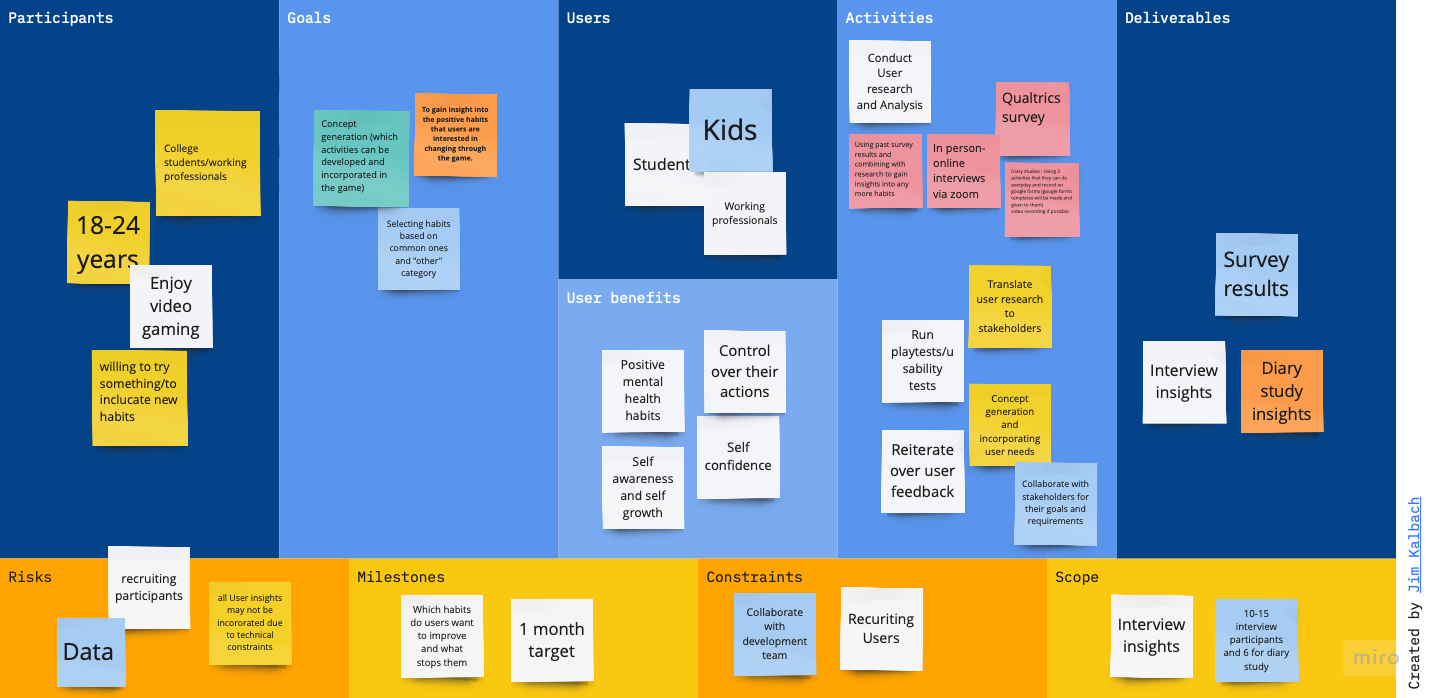
Research design & question framing
Collaborated with the team to co-design interview questions and research prompts, helping define what to ask, who to speak with, and how to explore motivation, habit formation, and ethical considerations prior to data collection.
-
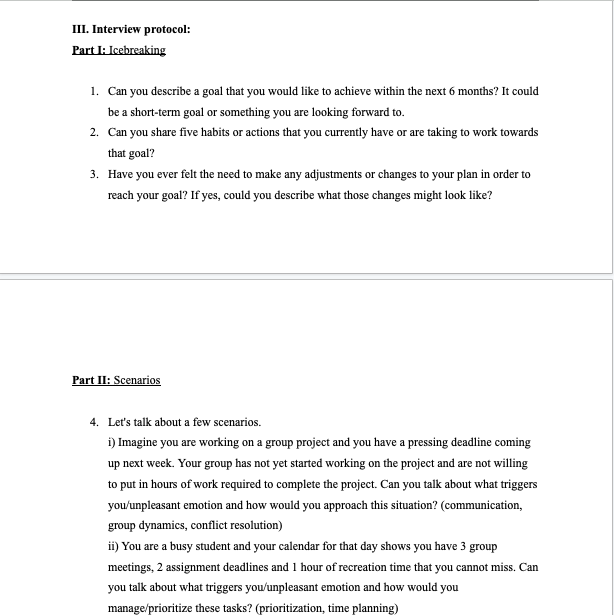
Empathy Interviews
Conducted pilot and in-depth interviews with college students and early-career young adults to understand routines, motivation challenges, and attitudes toward productivity, self-discipline, and gamified support tools.
-
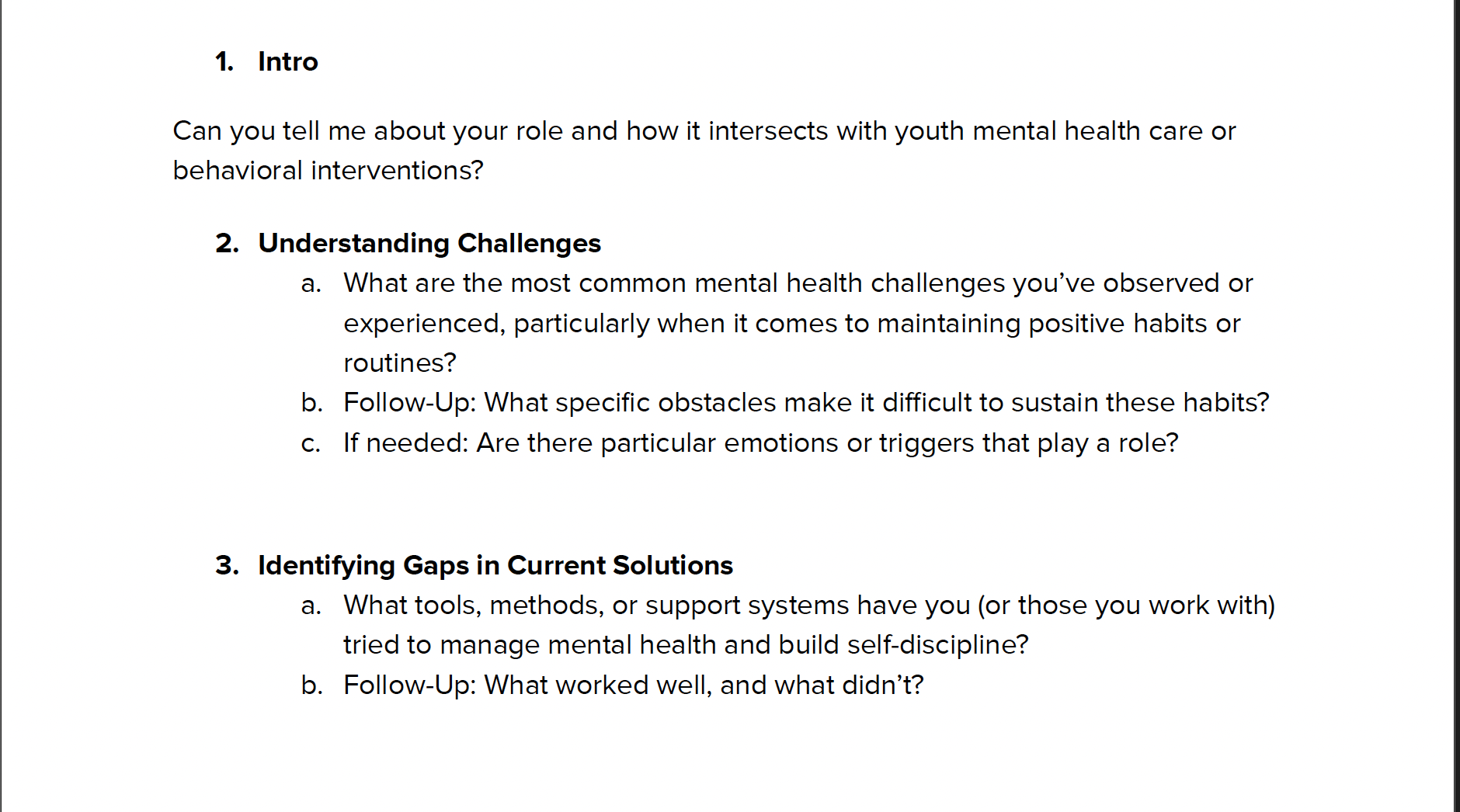
Mental Health Practitioner Interviews
Interviewed mental health practitioners to ground the concept in real care contexts, surfacing ethical considerations, risks, and practical constraints that informed early decisions.
-

Concept testing survey
Designed and analyzed a concept-testing survey to assess interest, perceived value, and concerns, helping prioritize which ideas warranted further exploration.
-
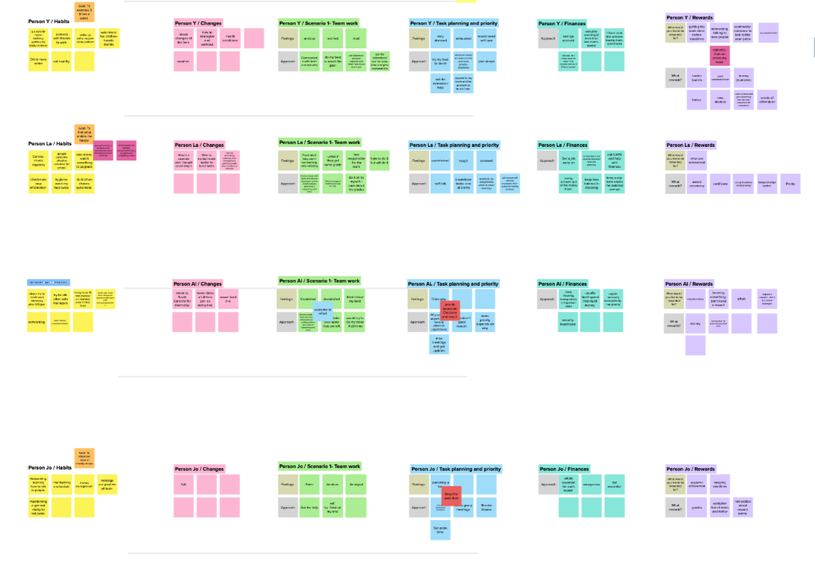
Synthesis and Thematc Analysis
Synthesized qualitative data through affinity mapping and thematic analysis to identify patterns, tensions, and opportunities that informed feasibility and early product direction.
-
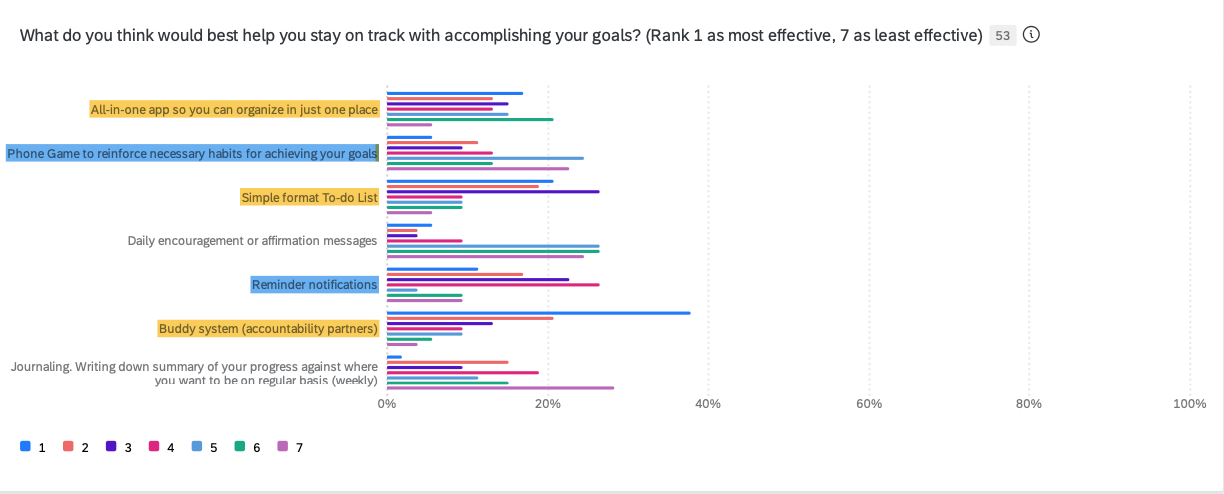
Ethical & feasibility considerations
Survey findings revealed a preference for supportive, low-pressure tools over constant reminders or enforced accountability. This guided ethical and feasibility decisions, helping the team avoid mechanisms that could increase stress or undermine autonomy in a mental-health-adjacent context.

Solution
Our solution leverages the power of immersive storytelling and thoughtfully curated mental health content within a mobile video game. This unique combination creates an engaging, calming, and rewarding experience that helps users develop positive daily habits and better manage their emotions.
Key system features:
Engaging design to foster consistent use. Captures users' attention and encourages daily interactions.
Immersive gameplay. Keeps users motivated and invested, making it a powerful tool for building habits and fostering personal growth.
Empowering mental health content. Provides practical guidance for navigating emotional challenges.
Curated lessons and resources. Offers valuable techniques to help users develop emotional awareness and resilience.
Key Takeaways
-
Working in a startup
Working in a dynamic startup environment reinforced the importance of proactive planning and adaptability. I learned how to anticipate uncertainty, adjust my approach quickly, and pivot when conditions or priorities changed.
-
Exploring a new field
Exploring game development revealed the complexity of designing interactive systems that balance engagement with purpose. This work expanded my understanding of how storytelling, mechanics, and user motivation intersect, while highlighting the technical and ethical considerations involved in creating meaningful game-based experiences.
-
Translating user insights to different stakeholders
Through this work, I learned how to translate user research into stakeholder-relevant narratives, aligning insights with technical, business, and ethical considerations to guide decisions.