
Talks & Invited Presentations
I’ve delivered talks and invited presentations on usability, human-centered design, and design science across healthcare, academic, and technical audiences, translating research and design methods into practical, real-world applications.
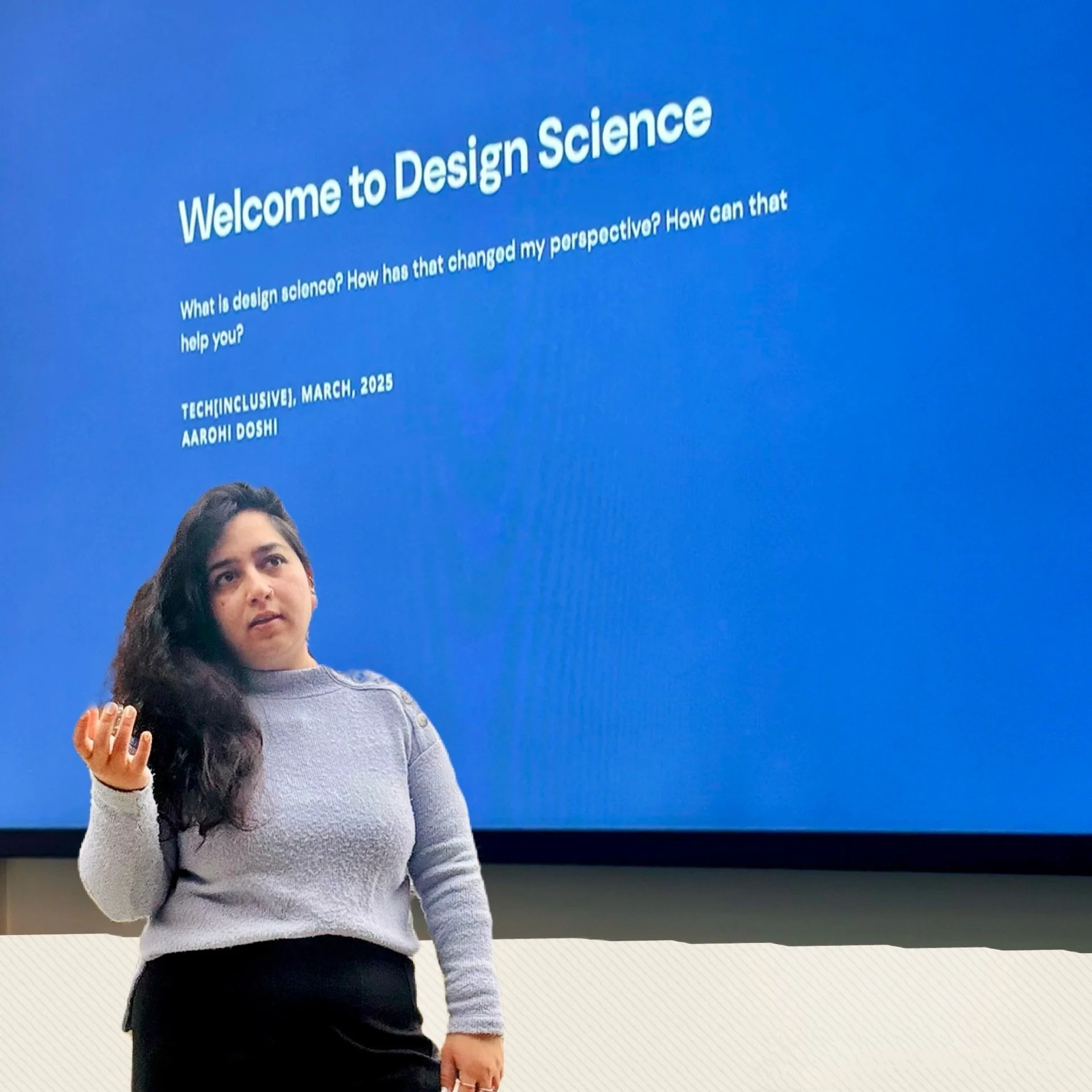
Introducing Design Science for Technologists
Talk for a technical audience
This talk introduced Design Science (DESci) as a practical, systems-oriented approach for tackling complex technical and organizational challenges. I began by framing common challenges faced by technologists such as fragmented problem-solving, misalignment between technical solutions and human needs, and difficulty translating research into action, and positioned Design Science as a way to bridge these gaps.
I then unpacked what Design Science is, outlining its core principles and pillars, and how it integrates research, systems thinking, and design practice. Through selected case examples, I demonstrated how DESci can be applied in real-world contexts to structure ambiguity, support interdisciplinary collaboration, and guide decision-making.
The session included a brief comparison of Design Science with Human-Centered Design and Design Thinking, highlighting where they overlap and where Design Science offers additional value for complex, socio-technical systems. I closed with reflections on learning, adoption, and how technologists can begin applying Design Science in their own work.
Testing That Works: Usability Meets Human-Centered Design
Michigan Institute for Clinical & Health Research × University of Pittsburgh
This talk explored how usability testing can serve as a practical entry point to human-centered design (HCD) in complex research and healthcare systems. I introduced core HCD principles, outlined foundational usability testing methods, and demonstrated how usability functions as an applied mechanism for embedding HCD into real-world projects.
Using the MICHR website as a case example, I discussed common challenges in aligning stakeholder expectations, navigating institutional constraints, and translating research insights into design decisions. The session concluded with key takeaways on integrating usability into iterative design practice, followed by an open Q&A.