
Eye Care for Detroit
Background
The City of Detroit is home to approximately 40,000 homebound residents. Many of these residents are most vulnerable and at greater risk of blindness and vision decline according to the Vision Detroit Project (2022). Eye Care For Detroit, Inc., was developed in 2022 as a sister-company to American Advantage Home Care, Inc., to help close the access to eye care gap for homebound Detroiters.
Our Goal
To create a database framework, a prototype of a mobile eye care unit, increased sign-up of care providers.
Our Response
We transformed the organization’s outreach and onboarding materials into a clear, cohesive experience by restructuring content and creating a polished slide deck that better communicated the mission and services to partners and stakeholders.
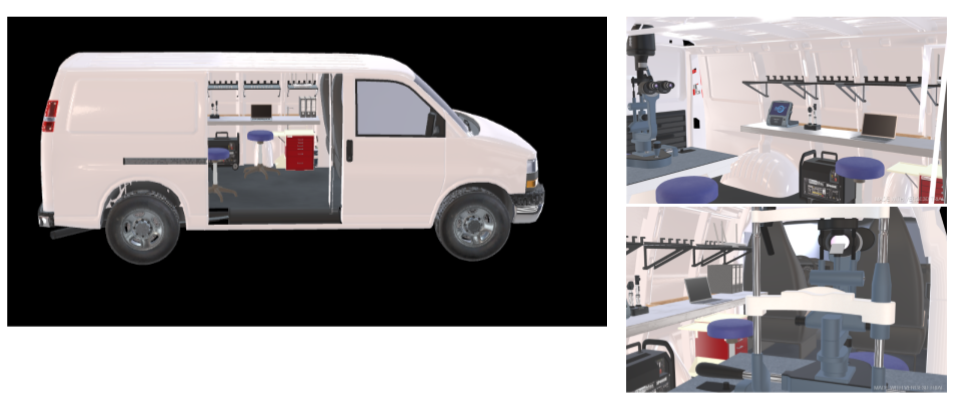
In parallel, we designed a 3D prototype of a mobile eye care unit and developed a corresponding budget to support feasibility and planning.
To enable long-term scalability, we also contributed to the development of a database architecture and sample framework to support secure storage and management of patient data.
Project Details
Working Team:
UX Designers, Engineers, Project Managers (Interdisciplinary Design Team)
Stakeholders / Partners:
Eye care for Detroit team, Faculty Advisors
Context:
University of Michigan, Eye care for Detroit Community-driven Project Management focused project.
Timeline:
3 months
Scope:
Project Management and Consulting
My Role : User Experience Researcher & Project Contributor
Focus: User Research | Cross-Functional Collaboration | Project & Consulting Support
Methods: User Interviews | Contextual Inquiry | Qualitative Synthesis | Affinity Mapping | Stakeholder Coordination | Risk & Scope Assessment
Tools: Zoom | Miro | Google Workspace
Key Project Highlights
Scope refinements
Irregular client engagement drove necessary scope refinements.
2. Dependencies affected timeline
Stakeholder-driven dependencies affected the timeline and workflow, requiring proactive planning and built-in buffers.
3. Interdisciplinary perspectives
Interdisciplinary perspectives informing creative problem-solving.
4. Collaboration
Unified team goals reinforcing strong collaboration.
5. Pivots
Unpredictable dependencies limited precise project planning.
6. Transparency
Transparent progress updates enhanced client buy-in.
Design Process
-

Scope
To ensure project flexibility, we defined the initial scope broadly, enabling us to adjust expectations and change the scope as needed. This allowed for exploration of different options and ensured adaptability to evolving needs. The approach resulted in delivering the best possible outcome for the client while remaining within the defined scope.
-

Engage
To ensure productive meetings, we focused on providing feedback and discussing potential steps for moving forward, keeping everyone engaged and motivated towards achieving the mission. The team's motivation towards the mission helped to keep everyone focused and working towards a common goal.
-

Plan
For effective planning, we used Asana to create a timeline and prioritized research and defining deliverables early. We broke down tasks into smaller pieces and spread them out evenly to ensure steady progress and avoid last-minute rushes.
-

Sell
Sharing progress with the client fostered excitement about the product and increased buy-in, creating a positive working relationship and ensuring satisfaction with the end product.
-

Research
Thorough research brought us closer to the client's knowledge base, supplementing their lack of engagement at times and leading to informed decision making and a successful outcome.
-

Innovate
Having the right information was crucial to the smooth process, and our diverse backgrounds enabled us to ask unique questions and approach problems creatively, leading to successful outcomes.
-

Decide
Flexibility in decision-making kept tasks on track, and an established timeline encouraged quick decision models to be implemented, ensuring efficient progress.
-

Manage
Divide and conquer was used to assign individuals to specific tasks, ensuring effective management and decision-making by the experts in each field, resulting in successful outcomes.
-

Change Management
We emphasized new goals and effectively pivoted to a new workflow when unable to achieve the original set goals, allowing us to adapt and achieve successful outcomes.
Solution
Onboard eye-care physicians, develop a mobile-eye care unit, and create a database for homebound patients to enhance accessibility and ensure robust vision care for the client.


“I could not be any more impressed by the professionalism, diligence, creativity, and follow-through from the team that was assigned to me from the U-M Project Management Course. They worked cohesively to research and design the rollout of a new enterprise offering for our business that will positively impact the lives of thousands of Detroiters with the potential of growing our business by 400% over the next two years. This program ensures that students work through the nuances and pitfalls of navigating from concept to pre-commercialization while aiding client organizations confidentially, thoughtfully and intimately.”
Dr. Cleamon Moorer Jr.
President and CEO American Advantage
Client Feedback
Key Takeaways
-
Scoping
Clearly defining the project scope, planning and regularly evaluating the plan, and developing contingency plans for unexpected events are key to project success.
-
Building strong stakeholder relationships
Building strong relationships with key stakeholders, understanding their communication preferences, involving them in decision-making, and communicating the value of proposed solutions can increase client engagement and support
-
Change management
Change management should be driven by a clear problem or need, and a clear change management plan should be developed that includes communication, training, and stakeholder engagement.