
Bounce: An AI Fitness coach
Problem
Fitness enthusiasts who enjoy working out independently often rely on online tutorials for guidance, which can result in incorrect posture and technique, leading to potential injuries. Hiring a personal trainer can be expensive and may not be a feasible option for everyone.
Our Goal
To use IoT technology to enhance the fitness training experience for individuals who prefer to work out alone, enabling them to achieve a healthier fitness journey and avoid potential injuries through real time posture corrective measures.
Our Response
An IoT AI Fitness Coach that provides real-time corrective measures, and determines risks before hand, aimed at a personalized and engaging workout experience for fitness enthusiasts.
Project Details
Working Team:
UX Designers, Interaction Designers, Engineers, Graphic Designers, AI Specialists (Interdisciplinary Design Team)
Stakeholders / Partners:
Student Teams, Media Specialists, Exercise Enthusiasts, Faculty Advisors
Context:
University of Michigan - Applied Interaction Design & AI-Integrated Product Design Academic Project
Timeline:
3 months (semester-long project)
Scope:
User Research, Interaction & UX Design, AI & IoT Integration, Accessibility & Usability Evaluation, Iterative Prototype Redesign
My Role: User Experience Researcher & Interaction Designer
User Research
Methods: Diary Studies, Semi-Structured Interviews, Surveys, Qualitative Pattern Analysis
Tools: Zoom, Miro, Google Workspace
Embodied & Interaction Analysis
Methods: Behavioral Observation, Analysis of Non-Verbal Cues, Micro-Interaction Analysis in Real Contexts
Tools: In-Context Observation, Miro
Experience Prototyping
Methods: Experience Prototyping through User Enactment, Interaction Flow Validation, Mental Model Visualization
Tools: Enactment Videos, Storyboarding, Miro
Testing & Failure Analysis
Methods: Error & Failure Analysis, Identification of Human and Systemic Breakdowns, Insight Synthesis for Design Refinement
Tools: Miro
Key Project Highlights
1. High fidelity prototype
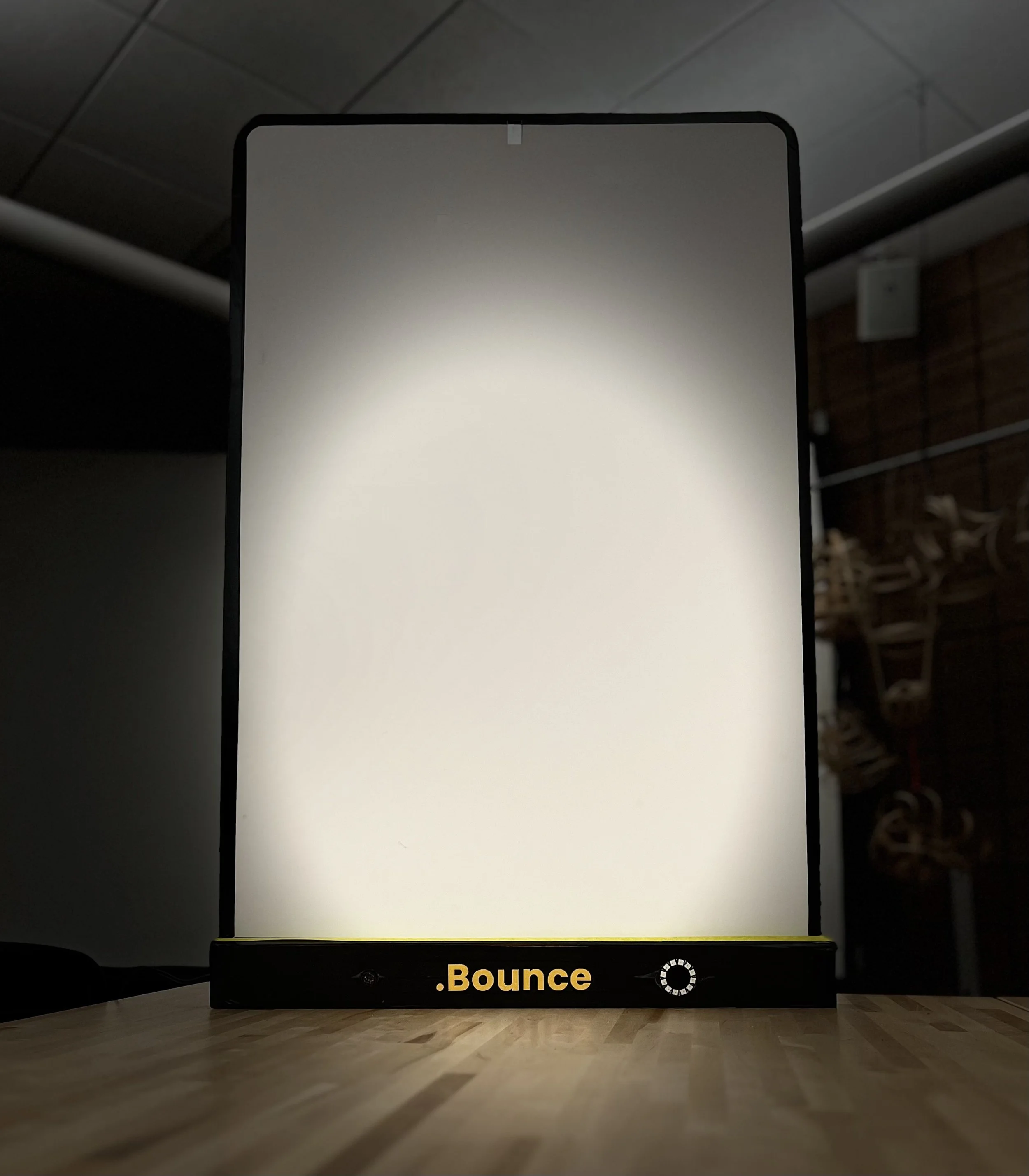
We used high-quality reflective surfaces for prototype demonstration and refined user journeys.
2. Motivation and Time management
Users required motivation to workout and lacked time-management skills.
3. Mirror over Hologram effect
Users preferred a mirror over a hologram effect as reflection of their own postures.
4. User enactment
The user enactment setting was comfortable for most participants, and the project did not include any intrusive or privacy-probing features.
5. Multimodal gestures
A combination of voice, screen, and gesture UI will be used to satisfy the basic functionalities of the comprehensive system to cater to accessibility and inclusion.
6. Cultural Bias
As an observation, there may be potential cultural biases related to body shape during the posture correction process.
Design Process
-

User Interviews
Through user interviews, we gained a deeper understanding of the context in which our system is used, as well as user actions related to fitness, pain points while working out alone, and saw an opportunity to improve user experience.
-

Dairy Studies and Survey
Diary studies with 20 participants were conducted with careful consideration for user privacy, allowing us to capture authentic behaviors and insights that are difficult to observe in real time. Additionally, surveys administered to 32 participants helped us understand user actions, preferences, and pain points at scale.
-

User Journey Map
Using a User Journey Map, we were able to visualize and analyze the actions and interactions of our users in different phases and on multiple levels like planning their workout, preparing, engaging, testing and disengaging in their workout journey. These insights allowed us to prioritize crucial user actions and improve the overall flow of the user experience.
-

Empathy Maps
Empathy mapping helped us gain deeper insight into our persona’s thoughts, feelings, and motivations. We structured the map around what the persona thinks, feels, hears, sees, says, and does, enabling us to better empathize with their experience and identify meaningful design opportunities.
-
User Enactments
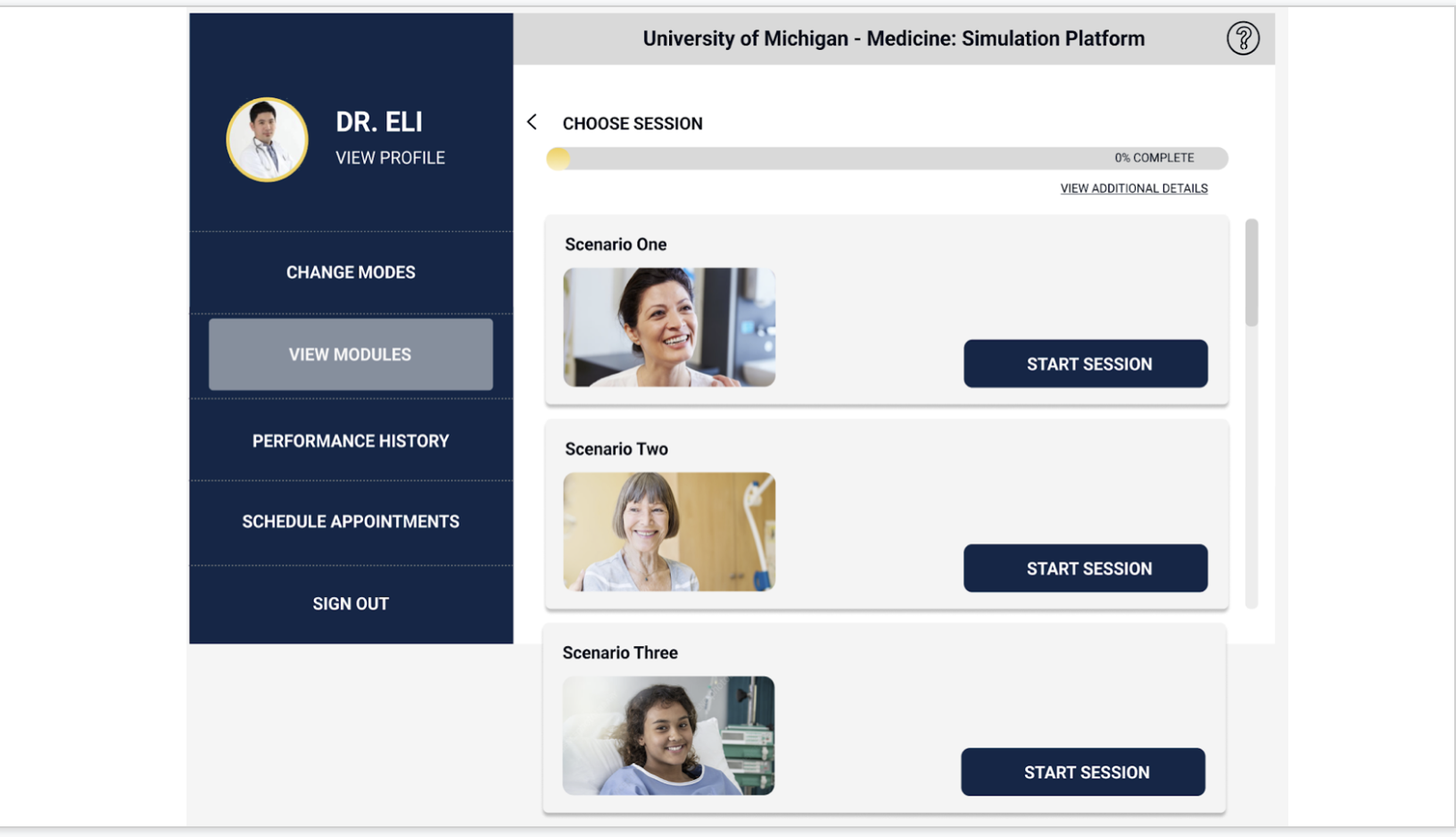
User enactments (UE) were conducted with a goal to understand how users engage with the device during exercise to understand the instructions most efficiently. The UE enabled us to observe and understand the interactions with the system and reiterate over system changes after their feedback and recommendations. Feedback was collected qualitatively through interviewing users about their experiences.
-

Speed Dating Matrix
The speed dating matrix proved to be an effective tool for evaluating the level of system engagement required in various scenarios pertaining to posture adjustment, workout motivation, and workout accompaniments.
-
Market Analysis
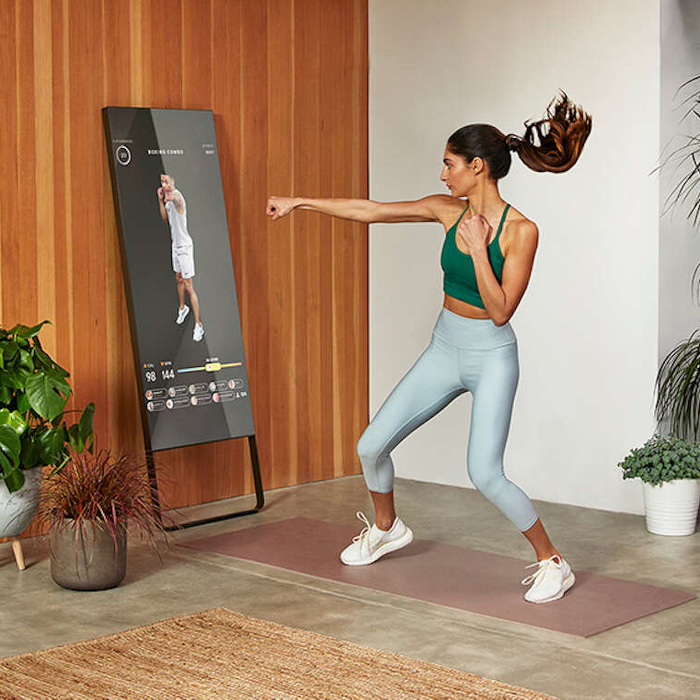
Drawing on insights from our diary study, surveys, and brainstorming sessions, we analyzed existing solutions such as the Apple Watch and Lululemon’s Smart Fitness Mirror to understand how current products motivate users and support performance tracking. While these tools enhance motivation and trackability, we identified gaps in immersive experience, interface friendliness, and material choices. These findings informed the direction of our prototype, which we then tested with a new group of participants.
-
Prototype and Testing
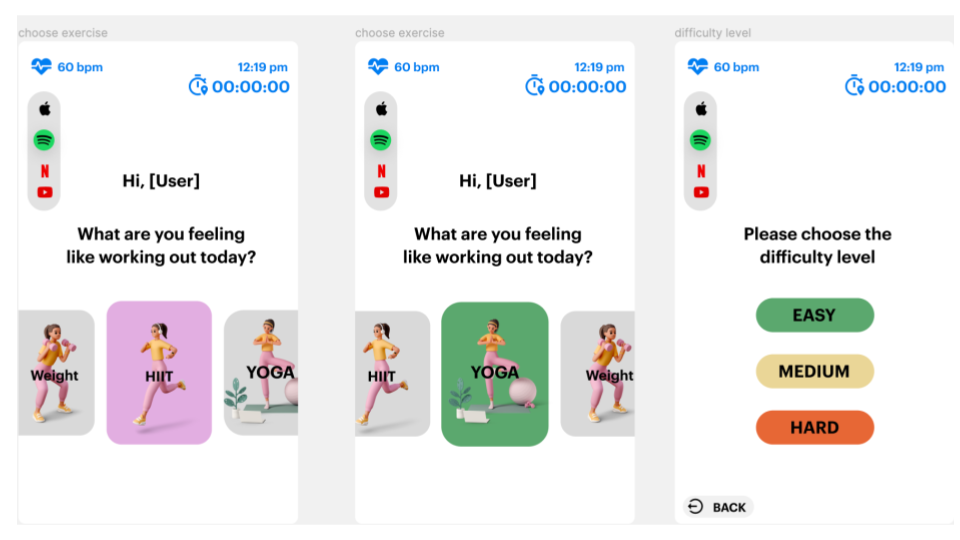
With the better scoped-down idea, primarily focussing on the posture-watch feature and accompaniment media during the exercise, the team created the mock-up of the product by projecting Figma animation onto the white wall and recruiting 5 participants to test the flow of the functionalities of our product.
Solution
Bounce is an IoT AI Fitness Coach that delivers personalized and engaging workout experiences with real-time posture feedback, corrective measures, and potential risk assessment.
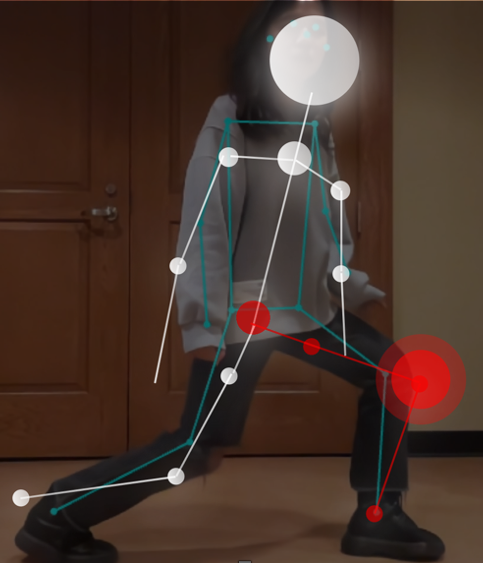

Real-time Posture Detection and Correction
Seamless Response to Gesture & Voice
Customizable Workout Intensity
Key Takeaways
-
System Network and User Experience
Developing IoT solutions requires a thorough effort that integrates multiple system networks and user interactions. It's important to acknowledge that not all hypotheses may be possible through technology, and user research can uncover unexpected observations that should be considered in the design process.
-
Rapid Prototyping and Testing
Rapid prototyping and usability testing can be effectively conducted with a small number of users depending on project goals and timelines.
-
Extensive User Research
User research is an important aspect of any project, but there are multiple techniques to conduct user research, and it's not always necessary to follow every technique. Project goals, timelines, and available resources can help determine the most appropriate user research techniques to use.